Why Use a French Press
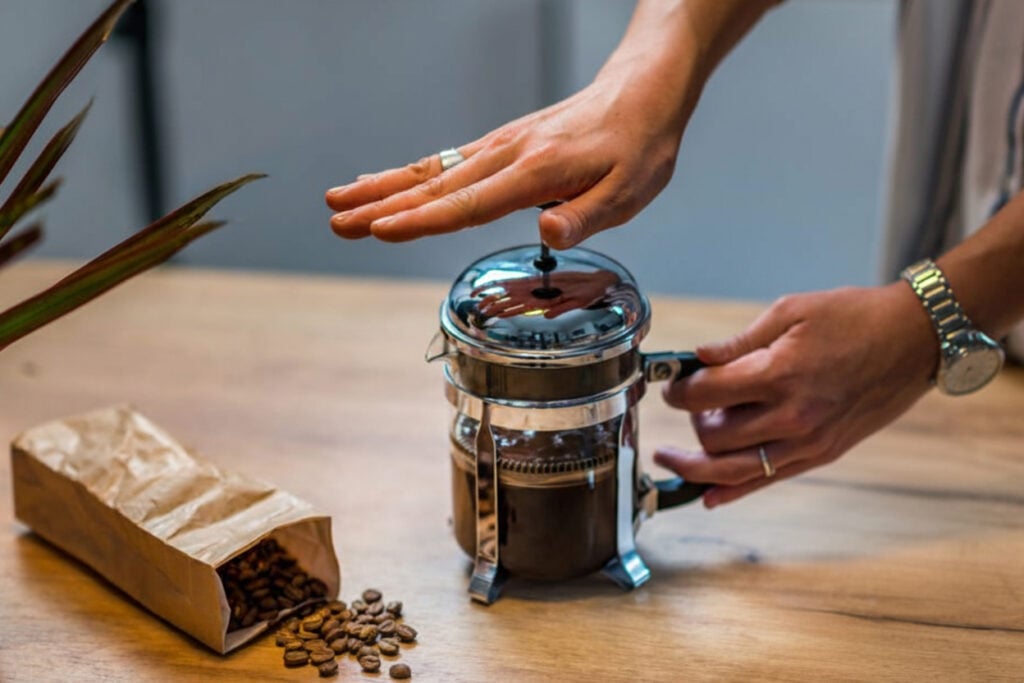
The French press (also called a cafetière or press pot) brews coffee by immersing coarse grounds in hot water, then pressing them down with a plunger and mesh filter, and this coffee brewing ratios and grind size chart provides a quick reference for dialing in extraction.
Because of the immersion method and mesh filter, you get a coffee with more body, more oils, and a richer texture than many drip brews. At BrewedWithin, our goal is to let the bean’s true flavour shine through — and the French press is an excellent way to do that.
What You’ll Need: Tools & Ingredients
Here’s your checklist before you brew.
Tools you need
- 1. A French press (glass or stainless carafe with plunger and mesh filter)
- 2. Burr coffee grinder (for best results)Burr coffee grinder (for best results)
- 3. Digital scale (to measure coffee and water)
- 4. Timer or stopwatch
- 5. Kettle (preferably one with temperature control, or just bring to boil and let cool slightly)
- 6. Spoon or stirring utensil (non-metal if your carafe is glass)
- 7. Mug or serving carafe
Ingredients
- 1. Freshly roasted whole-bean coffee from BrewedWithin (ground coarse just before brewing)
- 2. Filtered or clean water (taste-good water makes better coffee)
- 3. Optionally: pre-heat water for carafe
- 4. Coffee dose and water volume to match your desired yield
Recommended Ratios & Settings
- 1. A good starting ratio is about 1 g coffee : 15-17 g water for French press.
- 2. Grind size: coarse (think roughly the texture of coarse sea salt or breadcrumbs)
- 3. Water temperature: ~ 90-96 °C (195-205 °F)
- 4. Brew time: about 4-5 minutes for many setups, though some methods suggest longer steeping for immersion.
These serve as a solid starting point. Once you’ve brewed a few times you can fine-tune for your taste.
Step-by-Step: Brewing with a French Press
Let’s walk you through the process for one pot (you can scale up as needed).
Step 1: Pre-heat and Prepare
- 1. Bring your kettle to boil.
- 2. While it heats, place some hot water in the empty French press carafe to pre-heat it. This helps maintain temperature during brewing. Then discard the rinse water.
- 3. Place your French press on the scale (if you’re using it) and tare (set to zero).
Step 2: Measure and Grind Coffee
- 1. Measure your coffee dose. For example, if you want to brew about 400 g (≈ ml) of water, you might use ~24 g of coffee (1:16 ratio).
- 2. Grind your whole beans to coarse size — like coarse salt or breadcrumbs. Avoid fine grinding.
- 3. Pour the ground coffee into the warmed French press. Gently shake or tap the carafe so the grounds level out.
Step 3: Add Hot Water & Start the Brew
- 1. Heat your water to just off-boil (~ 90-96 °C) and pour the measured amount over the grounds, making sure all grounds are saturated. For immersion, you typically pour all water at once. Some guides split into bloom and full water, but for simplicity you can pour full volume.
- 2. Start your timer once you pour.
Step 4: Steep
- 1.Let the coffee steep undisturbed for about 4 minutes. Some brewers like 4-5 minutes for a balanced cup.
- 2. If you like, at about 30 seconds you can gently stir the brew with a spoon to break any crust and ensure even extraction. (Optional)
Step 5: Press and Serve
- 1. After your steep time is up, attach the plunger lid, then slowly press the plunger down. Do this gently, applying consistent pressure. If it plunges too fast, it may mean your grind is too coarse; too slow may mean too fine or over-packed.
- 2. Immediately pour the coffee into cups or a serving carafe. Don’t leave brewed coffee sitting in the French press with grounds; it will continue extracting and become bitter.
Step 6: Clean Up
- 1. Remove the used grounds (they are compostable!).
- 2. Rinse the carafe, plunger and filter mesh thoroughly.
- 3. Clean your gear regularly so old coffee oils and residue don’t affect future brews.
Troubleshooting Quick Reference
|
Problem |
Likely Cause |
What to Adjust |
|
Coffee tastes weak/sour |
Grind too coarse, dose too low, brew time too short |
Finer grind, use more coffee, extend steep time slightly |
|
Coffee tastes bitter/harsh |
Grind too fine, brew time too long, water too hot |
Coarser grind, shorten steep time, lower temperature |
|
Plunger is hard to press |
Grind too fine, too much coffee, packed too tightly |
Use coarse grind, lighten dose, stir gently before pressing |
|
Plunger goes down too easily |
Grind too coarse, dose too low, under-extracted |
Use finer grind, increase coffee dose |
|
Coffee sits with grounds and becomes over-extracted |
Leaving coffee in press after brewing |
Pour out brew immediately after pressing into cups/carafe |
Tips & Tweaks for Better Results
Here are extra suggestions to help you refine your brew.
- 1. Adjust grind size: If your brew plunges too quickly and tastes weak, make your grind finer next time. If it’s hard to press or tastes bitter, make the grind coarser.
- 2. Check water temperature: If your water is too hot, it can extract bitter compounds. If too cool, extraction may be underwhelming.
- 3. Use fresh beans: Coffee tastes best when beans are used within 2-4 weeks of roast (and ground just before brewing).
- 4. Clean equipment: Old oils and deposits can make coffee taste off.
- 5. Quality water: Use water that tastes good on its own; poor quality water will affect the final cup.
- 6. Proportion tweaks: If you prefer a stronger brew, you might try a ratio closer to 1:14 (more coffee). For lighter, 1:18 or more water.
- 7. Serve quickly: Once brewed, transfer to a carafe or cup right away so it doesn’t continue to extract.
Why This Method Works for Brewed Within
At Brewed Within, we’re all about letting the bean, roast and origin speak for themselves. The French press method supports that by:
- Retaining more natural oils and body so you get more of the bean’s character.
- Being forgiving enough to deliver rich flavour even if you're still learning.
- Giving you a richer, more sensory experience— aroma, texture and flavour.
- Allowing you to manually control grind, dose, water and time to match your beans.
Every time you brew this way, you’ll experience more of what our beans are built for — flavour clarity, aroma, and full cup satisfaction.
How to Use a French Press
Equipment
- A French press (glass or stainless carafe with plunger and mesh filter)
- Burr coffee grinder (for best results)
- Digital scale (to measure coffee and water)
- Timer or stopwatch
- Kettle (preferably one with temperature control, or just bring to boil and let cool slightly)
- Spoon or stirring utensil (non-metal if your carafe is glass)
- Mug or serving carafe
Ingredients
- Freshly roasted whole-bean coffee from BrewedWithin (ground coarse just before brewing)
- Filtered or clean water (taste-good water makes better coffee)
- Optionally: pre-heat water for carafe
- Coffee dose and water volume to match your desired yield
Instructions
- Boil water, preheat the French press with hot water then discard, place the press on a scale and tare to zero.
- Measure 24 g coffee for about 400 g water (1:16), grind coarse like coarse salt or breadcrumbs, add grounds and level.
- Heat water to 90 to 96 °C, start the timer as you pour the full water volume to saturate all grounds.
- Steep undisturbed for 4 minutes (up to 4 to 5 for a stronger cup), optionally stir at 30 seconds to break the crust and even extraction.
- Attach the lid and plunge slowly with steady pressure, then immediately pour into cups or a server to prevent over extraction.
- Compost the grounds, rinse carafe, plunger, and mesh thoroughly, and clean regularly to avoid stale oils affecting flavor.
Notes
Recommended Ratio & Settings
- A good starting ratio is about 1 g coffee : 15-17 g water for French press.
- Grind size: coarse (think roughly the texture of coarse sea salt or breadcrumbs)
- Water temperature: ~ 90-96 °C (195-205 °F).
- Brew time: about 4-5 minutes for many setups, though some methods suggest longer steeping for immersion.
FAQs
What is a French press and why use it?
A French press is a manual brewing device where coarsely ground coffee soaks in hot water, then you press a mesh plunger down to separate the grounds. It delivers rich flavour and full body.
What grind size should I use for French press coffee?
Use a coarse grind, roughly the size of coarse sea salt or breadcrumbs. Using a finer grind can lead to sediment, over-extraction, or difficult pressing.
What coffee to water ratio should I use?
A good starting point is about 1 g coffee to 15-17 g water. You can adjust slightly stronger (1:14) or lighter (1:18+) based on taste.
What temperature should the water be?
Use water around 90-96 °C (195-205 °F) for the best results. Avoid boiling full blast or using water that’s too cool.
How long should I steep the coffee?
A standard steep time is about 4 minutes, though you can brew a little longer (4-5 min) for more strength. Don’t let the coffee sit too long after plunging.
Why is my French press coffee bitter?
Bitterness often comes from too fine a grind, brew time too long, water too hot, or leaving the coffee with grounds after pressing. Adjust these to fix it.
Why is my French press coffee weak or watery?
Likely the grind size is too coarse, dose too low, steep time too short, or water ratio too high. Use slightly more coffee or finer grind.
Can I use pre-ground coffee in a French press?
You can, but it must be coarsely ground for French press. Coffee ground for drip or espresso is too fine and may cause excess sediment or bitter taste.
Should I pre-heat the French press?
Yes—rinsing the carafe with hot water pre-heats it and helps maintain proper brew temperature. Discard the rinse water before brewing.
How do I clean the French press after brewing?
Remove used grounds, rinse all parts (carafe, plunger, mesh filter) thoroughly. Once a week, deep-clean to remove oils and build-up to preserve flavour.
Final Words
The French press method might look simple, and it is—but it rewards mindfulness. Measure your coffee, pick the right grind, heat good water, steep for the right amount of time, press gently, and serve promptly. Do this with Brewed Within beans and you’ll uncover rich, satisfying cups every time.
Once you’ve mastered the basics, you’ll know your machine and beans well enough to tweak anything for your taste (stronger, lighter, more body or smoother). Until then, follow the method above, taste your results, and adjust slowly.
Here’s to great coffee. ☕
