- Published:
- Last Update: March 22, 2026
Accurate coffee brewing ratios, grind sizes, and timing for every major method so you can brew better coffee at home — whether you love espresso, pour-over, French press, AeroPress, drip, cold brew, or a Moka pot.
This chart is designed to help you fix bitter, sour, weak, or muddy coffee by adjusting ratios, grind size, and brew time in a controlled, repeatable way instead of guessing.
How this guide was developed
The ratios and grind size ranges in this guide are based on standard extraction theory and consistency testing across espresso, immersion, and drip methods.
These numbers are designed as reliable starting points, not rigid rules.
How to Use This Coffee Brewing Reference Guide
Use this page to:
- Find the right coffee-to-water ratio for your brew
- Match grind size to your brewing method
- Check typical brew times
- Troubleshoot common taste issues
Coffee Brewing Basics That Affect Every Method
Why Brewing Ratio Matters
The brewing ratio is the relationship between the weight of coffee grounds and the amount of water used. This balance directly controls strength and extraction. Ratios that are too weak can produce thin, hollow coffee, while ratios that are too strong can lead to bitter, over-extracted flavors.
New to ratios and measuring by weight? Coffee-to-Water Ratios Explained for Beginners shows how to pick a starting ratio and adjust strength without throwing off flavor.
For example, espresso uses a tight coffee-to-water ratio and a fine grind to extract concentrated flavor in under 30 seconds, while French press relies on a looser ratio and a coarse grind to prevent over-extraction during a longer, four-minute immersion.
Reference: SCA Coffee Standards
Why Grind Size Changes Flavor
Grind size controls how quickly water extracts flavor from coffee by changing the total surface area exposed during brewing. Finer grinds increase surface area, causing faster extraction and more intense flavors, while coarser grinds slow extraction and reduce the risk of bitterness during longer brew times.
For example, espresso requires a fine grind to extract fully in under 30 seconds, while immersion methods like French press use a coarse grind to maintain balance during several minutes of contact with water.
The best results come from adjusting grind size, brewing ratio, and brew time together, rather than changing one variable in isolation.
If you’re not sure whether to change grind size or brew time first, use this breakdown on how they affect extraction differently. Read Brew Time vs Grind Size to make the fastest fix without guessing.
Brew Time and Extraction Balance
Brew time determines how long water interacts with coffee grounds, directly influencing extraction and flavor balance. Each brewing method has an optimal time window designed to extract desirable compounds while limiting harsh or bitter flavors.
Reference: SCA Gold Cup Standard
If brew time is too short, extraction is incomplete and coffee can taste sour or under-developed. If brew time runs too long, over-extraction occurs, often resulting in bitterness, dryness, or a hollow finish.
Together, brewing ratio, grind size, and brew time form the foundation of balanced extraction across all coffee brewing methods.
Use the charts below as a quick reference, then fine-tune based on taste using the troubleshooting sections further down the page.
Coffee Brewing Ratio and Grind Size Chart (Quick Reference)
Brewing Ratio Chart (Coffee to Water)
| Brew Method | Coffee to Water Ratio | Example (20g Coffee) |
|---|---|---|
| Espresso | 1:2 | 20g → 40g liquid |
| Pour-Over | 1:15–1:17 | 20g → 300–340g water |
| French Press | 1:12–1:15 | 20g → 240–300g water |
| AeroPress | 1:10–1:17 | 20g → 200–340g water |
| Drip Coffee | 1:16 | 20g → 320g water |
| Cold Brew | 1:5–1:8 (concentrate) | 100g → 500–800g water |
| Moka Pot | ~1:10 (approximate) | 20g → 200g water |
Note: These ratios are starting points. Small changes in grind size, brew time, or coffee dose will affect strength, balance, and flavor clarity.
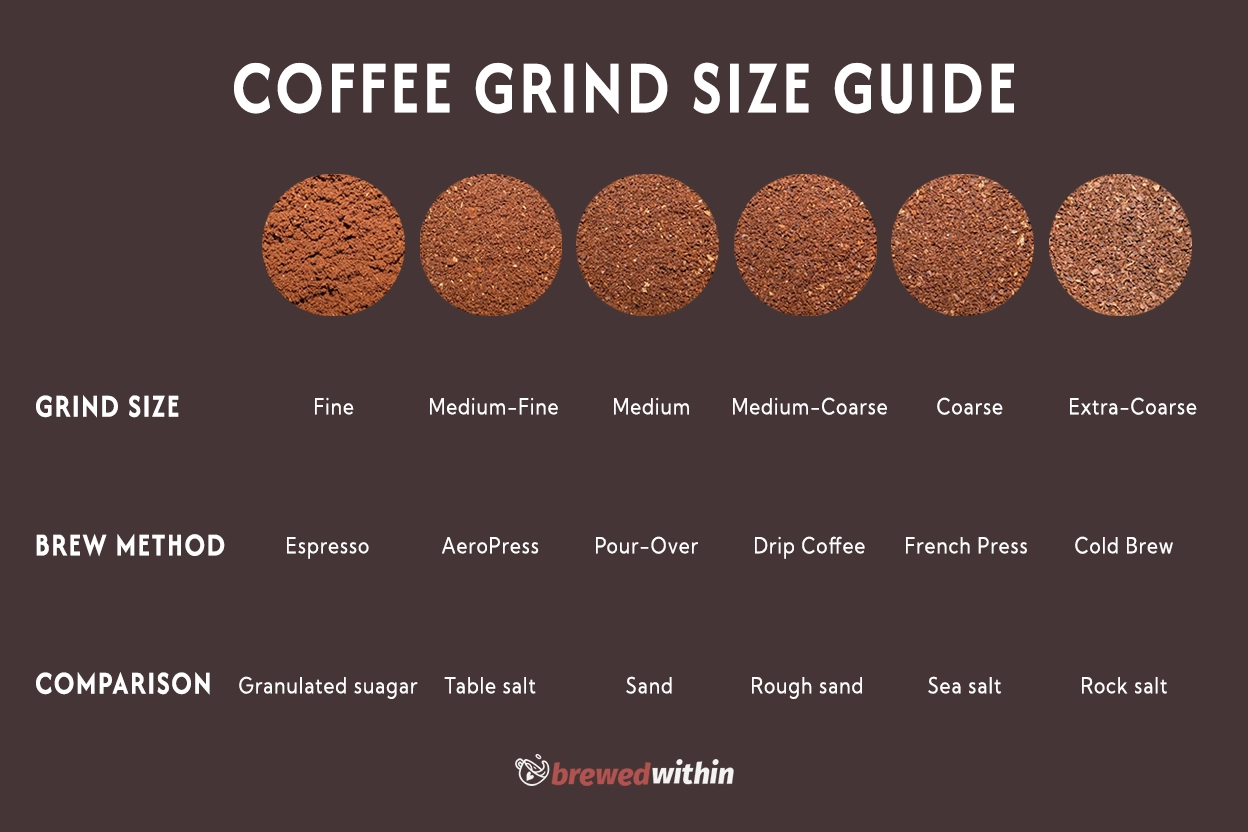
Coffee Grind Size Chart
| Brew Method | Grind Size | Texture Reference |
|---|---|---|
| Espresso | Fine | Powdered sugar |
| Pour-Over | Medium-Fine | Table salt |
| French Press | Coarse | Breadcrumbs |
| AeroPress | Fine–Medium | Sand to salt |
| Drip Coffee | Medium | Regular sand |
| Cold Brew | Extra-Coarse | Cracked peppercorns |
| Moka Pot | Fine–Medium | Slightly coarser than espresso |
Note: Grind size descriptions refer to texture rather than grinder numbers, since settings vary by grinder brand, burr design, and calibration.
Brew Time Guidelines by Method
| Brew Method | Brew Time |
|---|---|
| Espresso | 25–30 seconds |
| Pour-Over | 2:30–4:00 |
| French Press | 4:00 |
| AeroPress | 1:30–3:00 |
| Drip Coffee | 4–6 minutes |
| Cold Brew | 12–24 hours |
| Moka Pot | 4–6 minutes |
Note: Brew times are general guidelines. Grind size, brewing ratio, roast level, and water temperature can shift ideal extraction times slightly for each method.
Common Coffee Brewing Mistakes by Method
Espresso
Espresso is highly sensitive to grind size and timing, which makes small adjustments critical for balanced extraction.
Common Mistakes
- Grinding too fine, causing slow, bitter shots
- Grinding too coarse, resulting in fast, sour extraction
Troubleshooting
- If shots run longer than 35 seconds and taste harsh, grind slightly coarser while keeping the same dose.
- If shots finish under 20 seconds and taste sharp or thin, grind finer in small, controlled steps.
- Aim for a steady flow with a balanced extraction time of 25–30 seconds.
Explore more
- Espresso brewing guide
- Espresso grind size
- Espresso shot timing
- Espresso extraction basics
Pour-Over
Pour-over brewing relies on controlled water flow and even extraction, making grind size, pouring technique, and bloom time especially important for clarity and balance.
Common Mistakes
- Grinding too fine, leading to slow drawdown or stalling
- Pouring too quickly or unevenly
- Skipping or rushing the bloom phase
Troubleshooting
- If water pools and drains slowly, grind slightly coarser to improve flow.
- If the brew finishes too quickly and tastes weak, grind a bit finer.
- Use a controlled, circular pour and allow a 30–45 second bloom to release trapped gases.
Explore more
- Pour-over brewing guide
- V60 grind size
- Pour-over bloom time
- Pour-over coffee ratios
French Press
French press brewing is an immersion method that depends on a coarse grind and gentle handling, making grind size, agitation, and plunge speed key factors for a clean, balanced cup.
Common Mistakes
- Grinding too fine, creating sludge and bitterness
- Over-stirring the slurry
- Pressing the plunger too quickly
Troubleshooting
- If coffee tastes muddy or dry, switch to a coarser grind.
- Stir gently once, then allow the coffee to steep undisturbed.
- Press the plunger slowly to avoid forcing fine particles through the filter.
Explore more
- French press brewing guide
- French press grind size
- French press coffee ratio
- French press brewing time
AeroPress
AeroPress brewing offers flexibility and speed, but balanced extraction depends on controlled pressure, water temperature, and steep time.
Common Mistakes
- Inconsistent plunge pressure
- Using boiling water with light roasts
- Using random ratios without control
Troubleshooting
- If coffee tastes bitter, slightly reduce water temperature or shorten brew time.
- If coffee tastes sour, extend steep time or grind finer.
- Apply steady, gentle pressure during the plunge to promote even extraction.
Explore more
- AeroPress brewing guide
- AeroPress grind size
- AeroPress coffee ratio
- AeroPress brew time
Drip Coffee
Drip coffee relies on consistent water distribution and the correct grind size to achieve even extraction, making grind uniformity and basket flow key factors for balanced flavor.
Common Mistakes
- Grinding too fine, causing over-extraction
- Grinding too coarse, leading to weak flavor
- Uneven water distribution in the filter basket
Troubleshooting
- If coffee tastes bitter, switch to a medium grind and slightly reduce the dose.
- If coffee tastes flat or watery, increase the coffee amount or grind finer.
- Ensure water flows evenly across the grounds during brewing.
Explore more
- Drip coffee brewing guide
- Drip coffee grind size
- Coffee maker brewing ratio
- Automatic coffee maker tips
Cold Brew
Cold brew uses long immersion and low temperatures, which makes grind size, steep time, and dilution especially important for producing a smooth, balanced concentrate.
Common Mistakes
- Grinding too fine, causing cloudy or bitter concentrate
- Steeping longer than 24 hours
- Incorrect dilution after brewing
Troubleshooting
- If the concentrate tastes harsh, use a coarser grind and shorten the steep time.
- If the brew tastes weak, increase the coffee dose rather than extending steep time.
- Dilute the concentrate gradually with water or milk until balanced.
Explore more
- Cold brew coffee ratio
- Cold brew grind size
- Cold brew steep time
- Cold brew concentrate guide
Moka Pot
Moka pot brewing uses steam pressure and direct heat, making grind size, heat control, and timing critical for avoiding bitterness and burnt flavors.
Common Mistakes
- Tamping the grounds
- Brewing over high heat
- Leaving the pot on heat too long
Troubleshooting
- If coffee tastes burnt, lower the heat and remove the pot as soon as brewing finishes.
- If extraction stalls, ensure the grind is not too fine and the grounds are not packed.
- Use preheated water in the base to reduce overheating during extraction.
Reference: Bialetti Moka Express manual
Explore more
- Moka pot brewing guide
- Moka pot grind size
- Stovetop coffee ratios
- Moka pot extraction tips
Coffee Taste Troubleshooting Guide
Sour Coffee (Under-Extracted)
- Grind slightly finer
- Increase brew time
- Strengthen the coffee-to-water ratio
Sour flavors usually indicate the coffee hasn’t extracted long enough.
Bitter Coffee (Over-Extracted)
- Grind slightly coarser
- Reduce brew time
- Weaken the coffee-to-water ratio
Bitterness often comes from extracting too much, too quickly, or for too long.
Weak Coffee
- Increase the coffee dose
- Improve grind consistency
- Check water temperature (aim for proper brewing range)
Weak coffee is typically a strength issue rather than a flavor defect.
Muddy or Flat Flavor
- Grind too fine
- Over-extraction
- Switch to a coarser grind and shorten contact time
Muddy or dull cups usually come from excess fines or prolonged extraction.
Method Guides on Brewed Within
Explore each brewing style in more detail with these internal guides:
- Espresso brewing fundamentals – using your espresso machine with proper extraction context
- Pour-over brewing tutorial – How to Use Pour-Over with Brewed Within
- French press walk-through – How to Use a French Press: A Complete Guide by Brewed Within
- Auto-drip brewing guide – How to Use an Auto-Drip Coffee Maker with Brewed Within
Why These Ratios and Grinds Are Guidelines, Not Rules
Coffee extraction is influenced by multiple variables, including:
- Bean origin
- Roast level
- Water temperature
- Grinder precision
These charts are designed to provide reliable starting points, not rigid constraints. Small adjustments based on taste and equipment will always lead to better results.
FAQs
What is the best coffee-to-water ratio for brewing coffee?
The most common starting point is a 1:16 ratio, meaning 1 gram of coffee for every 16 grams of water. This works well for drip coffee and pour-over. Other methods like espresso, French press, and cold brew require different ratios based on extraction style
Why does my coffee taste bitter even when I follow the ratio?
Bitter coffee is usually caused by over-extraction, not just ratio. Common reasons include grinding too fine, brewing too long, or using water that is too hot. Adjust grind size first before changing the ratio.
Why does my coffee taste sour?
Sour coffee is a sign of under-extraction. This often happens when the grind is too coarse, brew time is too short, or not enough coffee is used. Grinding slightly finer is usually the fastest fix.
How do I know if my grind size is correct?
If coffee tastes balanced, clean, and sweet, the grind size is likely correct.
If it tastes sour, the grind is usually too coarse.
If it tastes bitter or dry, the grind is often too fine.
Matching grind size to the brewing method is more important than chasing exact ratios.
Is grind size more important than coffee ratio?
Grind size has a larger impact on flavor than ratio in most cases. Even a perfect ratio will taste off if the grind size is wrong. Ratio controls strength, while grind size controls extraction.
Should I measure coffee by weight or by scoops?
Measuring by weight is more accurate. Scoops vary based on grind size, roast level, and bean density. Using a scale ensures consistent brewing results across different coffees and methods.
What grind size should I use for pour-over coffee?
Pour-over coffee works best with a medium-fine grind, similar to table salt. This allows proper flow while maintaining enough contact time for balanced extraction.
Why does my French press coffee taste muddy?
Muddy French press coffee is usually caused by grinding too fine or pressing the plunger too quickly. A coarse grind and slow plunge help reduce sediment and bitterness.
Are coffee brewing ratios strict rules?
No. Brewing ratios are guidelines, not fixed rules. Bean origin, roast level, grinder quality, and personal taste all influence the final result. Ratios provide a reliable starting point that you can adjust based on flavor.
Can I use the same ratio for all brewing methods?
No. Each brewing method extracts coffee differently. Espresso, immersion, and drip brewing all require different ratios and grind sizes to achieve balanced flavor.
Final Brewed Within tips
If your coffee doesn’t taste right, adjust only one variable at a time. Start with grind size, then fine-tune brew time, and change the coffee-to-water ratio last. Small, controlled adjustments lead to better, more consistent results.
Related Coffee Brewing Guides
Deepen your understanding of brewing fundamentals with these supporting guides:
- Best Grind Size for Each Brew Method (With Visual Examples) – Match grind texture to your brewing style.
- Coffee-to-Water Ratios Explained for Beginners – Learn how ratios control strength and balance.
- Brew Time vs Grind Size: What Actually Matters More? – Understand how extraction speed and contact time interact.
- Why Your Coffee Tastes Bitter (By Brew Method) – Fix harsh or over-extracted coffee.
- Why Coffee Tastes Sour and How to Fix It – Solve under-extraction and sharp flavor issues.
- How to Adjust Coffee Ratios for Light vs Dark Roasts – Fine-tune your brew based on roast level.
