- Published:
- Last Update: March 22, 2026
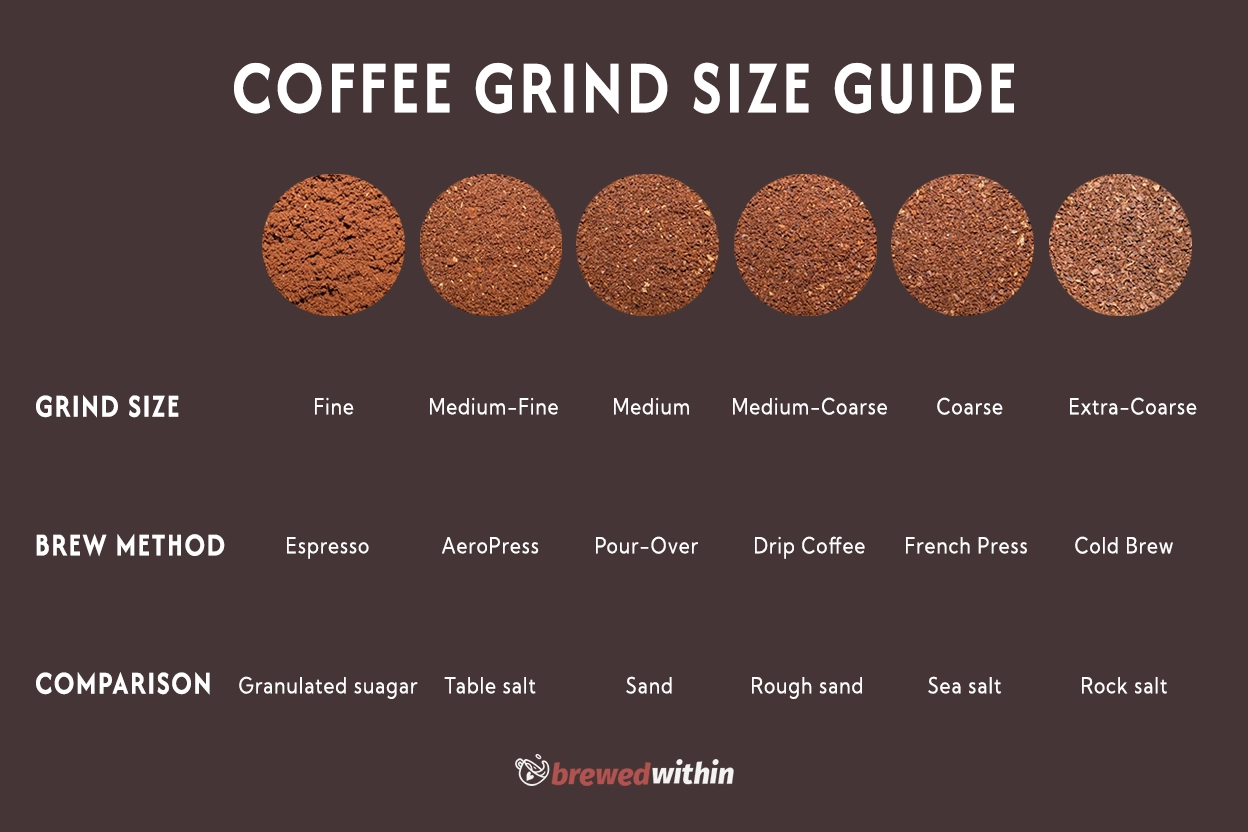
Grind size is one of the most important variables in coffee brewing. Even small changes can turn a balanced cup into something bitter, sour, weak, or muddy.
Each brewing method extracts coffee differently. The correct grind size depends on how long water stays in contact with the grounds, how quickly water flows, and whether pressure is involved.
This guide explains why grind size matters, then breaks down the best grind size for each brew method using clear texture references and practical adjustments you can apply at home.
How to use this guide
Grind size controls how quickly coffee extracts by changing the surface area exposed to water.
Start with the recommended grind for your brew method, then adjust one step at a time based on taste. Use brew time as a confirmation, not the first variable to change.
Why Grind Size Matters in Coffee Brewing
Grind size controls extraction speed by changing how much surface area water touches.
Finer particles increase extraction speed, while coarser particles slow it down, directly affecting flavor balance.
- Finer grinds extract faster and increase intensity
- Coarser grinds extract more slowly and reduce bitterness
When grind size does not match the brew method:
- Too fine leads to bitterness, dryness, or stalled flow
- Too coarse leads to sour, thin, or weak coffee
Grind size must always work together with brew time and coffee-to-water ratio. Changing grind size alone often fixes problems faster than changing anything else.
If you’re deciding what to adjust first when a cup tastes off, read Brew Time vs Grind Size: What Actually Matters More? for a clear rule of thumb.
For a complete baseline reference, use the Coffee Brewing Ratios and Grind Size Chart alongside this guide.
Espresso Grind Size
Best grind size: Fine
Texture reference: Powdered sugar or very fine table salt
Espresso uses pressure and a short extraction window. A fine grind creates resistance so water extracts properly in about 25–30 seconds.
Signs your espresso grind is off
If your cup turns harsh after grinding finer, use Why Your Coffee Tastes Bitter (By Brew Method) to correct over-extraction by method.
- Too fine: slow shots, bitterness, harsh finish
- Too coarse: fast shots, sour taste, weak body
How to dial it in
- Adjust grind in very small steps
- Watch shot time and flow, not just taste
Balanced espresso flows steadily and finishes clean, without sharp bitterness.
Pour-Over Grind Size
Best grind size: Medium-fine
Texture reference: Table salt
Pour-over brewing relies on gravity and controlled flow. The grind must allow water to pass evenly without stalling or rushing through.
Grind size must match flow rate to prevent stalling or under-extraction.
Signs your pour-over grind is off
- Too fine: slow drawdown, bitterness
- Too coarse: fast drain, sour or hollow cup
How to dial it in
- Keep total brew time within range
- Adjust grind before changing ratio
A good pour-over tastes clear, structured, and balanced.
French Press Grind Size
Best grind size: Coarse
Texture reference: Breadcrumbs or coarse sea salt
French press is a full immersion method. A coarse grind prevents over-extraction and excess fines in the cup.
Signs your French press grind is off
- Too fine: muddy texture, bitterness
- Too coarse: weak, under-developed flavor
How to dial it in
- Use consistent coarse particles
- Stir gently once, then leave the slurry undisturbed
A proper French press cup feels full and smooth, not dry or gritty.
AeroPress Grind Size
Best grind size: Fine to medium
Texture reference: Sand to table salt
AeroPress is flexible. The ideal grind depends on steep time, pressure, and recipe style.
Different recipes adjust grind size and steep time to control extraction.
Signs your AeroPress grind is off
- Too fine: bitterness with heavy pressure
- Too coarse: sour or thin cup
How to dial it in
- Match grind size to steep time
- Use gentle, steady plunge pressure
AeroPress responds well to small, controlled adjustments.
Drip Coffee Grind Size
Best grind size: Medium
Texture reference: Regular sand
Automatic drip machines depend on even water distribution across the coffee bed.
Signs your drip grind is off
- Too fine: bitterness and over-extraction
- Too coarse: weak or watery coffee
How to dial it in
- Focus on grind uniformity
- Avoid extreme grind changes
Good drip coffee tastes steady and balanced from start to finish.
Cold Brew Grind Size
Best grind size: Extra-coarse
Texture reference: Cracked peppercorns
Cold brew uses long steep times and low temperatures. A coarse grind prevents harsh flavors.
Signs your cold brew grind is off
- Too fine: cloudy, bitter concentrate
- Too coarse: weak extraction
How to dial it in
- Extend steep time before grinding finer
- Dilute only after tasting
Cold brew should taste smooth, mellow, and rounded.
Moka Pot Grind Size
Best grind size: Fine to medium
Texture reference: Slightly coarser than espresso
Moka pots use steam pressure, not pump pressure. The grind must allow steady flow without choking.
Signs your moka pot grind is off
- Too fine: bitter, burnt flavors
- Too coarse: sour or weak cup
How to dial it in
- Never tamp the grounds
- Use medium heat and remove from heat promptly
A good moka pot cup is intense but not harsh.
Quick Grind Size Fix Checklist
If your coffee tastes off, start here:
- Bitter or harsh → grind slightly coarser
- Sour or thin → grind slightly finer
- Muddy texture → reduce fines
- Weak flavor → check grind consistency
Change grind size first before adjusting ratio or temperature.
If you do need to change strength after dialing grind, Coffee-to-Water Ratios Explained for Beginners shows how to adjust ratios without guessing.
Why Grind Size Is Not a Grinder Number
Grinder settings vary by:
- brand
- burr size and shape
- burr wear
- calibration
That’s why grind size should be judged by texture, not numbers. Visual comparison and taste provide more reliable results than any dial setting.
Frequently Asked Questions About Grind Size
Does grinding finer always make coffee stronger?
No. It increases extraction, which can lead to bitterness if pushed too far.
Can I use one grind size for every method?
No. Each brewing method requires a different grind to extract properly.
Why does my coffee taste bitter even with the right grind?
Brew time, ratio, or water temperature may be too high.
Why does my coffee taste sour with coarse grinds?
Coarse grinds extract slowly and may under-extract.
Is pre-ground coffee good enough?
It works, but it limits control and goes stale faster.
How often should I adjust grind size?
Any time you change beans, roast level, or brew method.
Can blade grinders work?
They produce uneven particles and make dialing in difficult.
Should I change grind size or ratio first?
Change grind size first. It has the largest impact.
What’s the fastest way to fix bad coffee?
Adjust grind size in small, controlled steps.
Final Brewed Within Tip
Grind size is the foundation of good coffee. When the grind matches the brew method, balance becomes easier to achieve and easier to repeat.
Related Coffee Brewing Guides
Deepen your understanding of brewing fundamentals with these supporting guides:
- Coffee Brewing Ratios and Grind Size Chart (All Methods Explained) – Master the core variables behind balanced extraction.
- Brew Time vs Grind Size: What Actually Matters More? – Understand how extraction speed and contact time interact.
- Coffee-to-Water Ratios Explained for Beginners – Learn how ratios control strength and balance.
- Why Your Coffee Tastes Bitter (By Brew Method) – Fix harsh or over-extracted coffee.
- Why Coffee Tastes Sour and How to Fix It – Solve under-extraction and sharp flavor issues.
- How to Adjust Coffee Ratios for Light vs Dark Roasts – Fine-tune your brew based on roast level.
