What a ristretto is
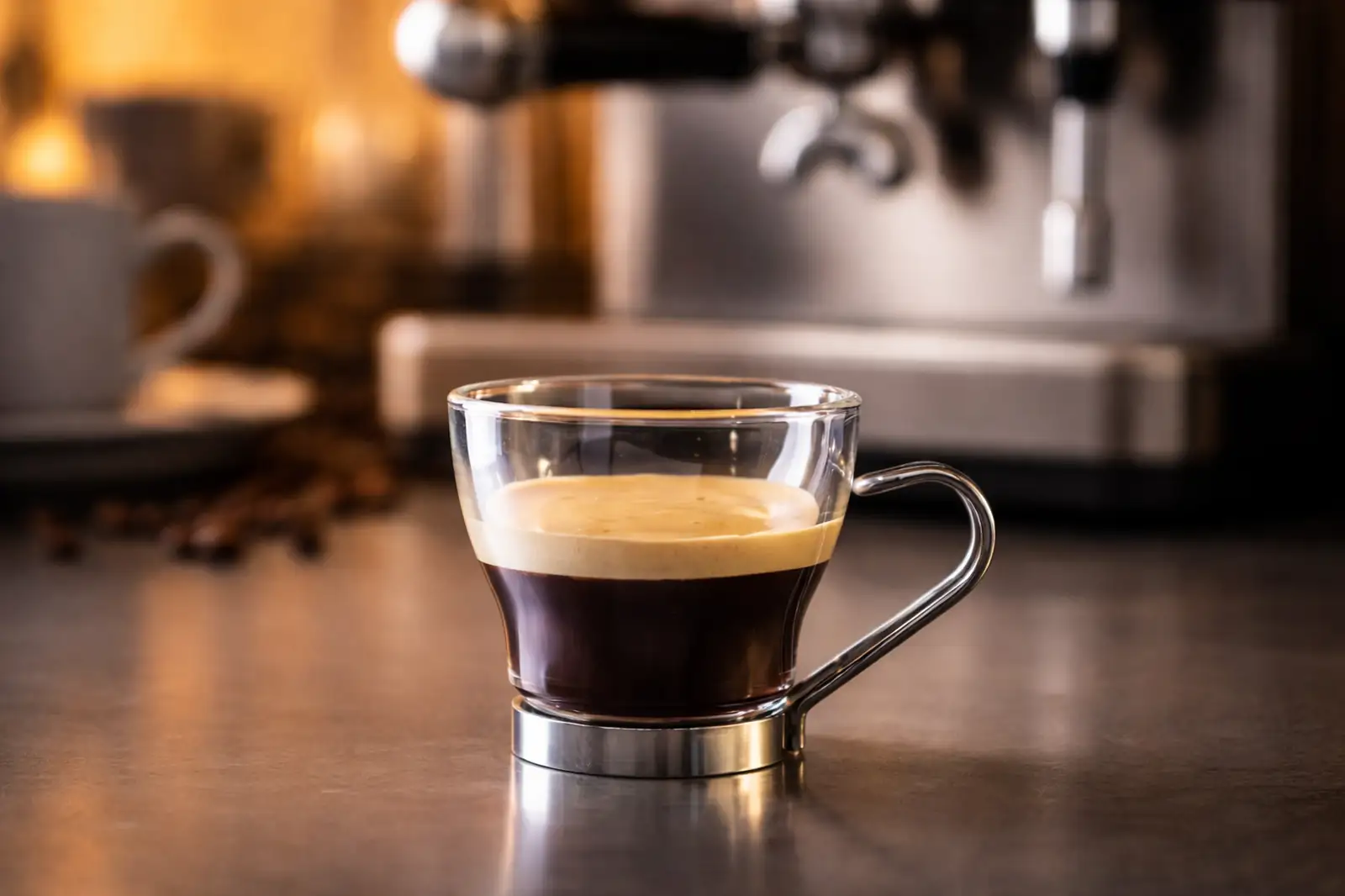
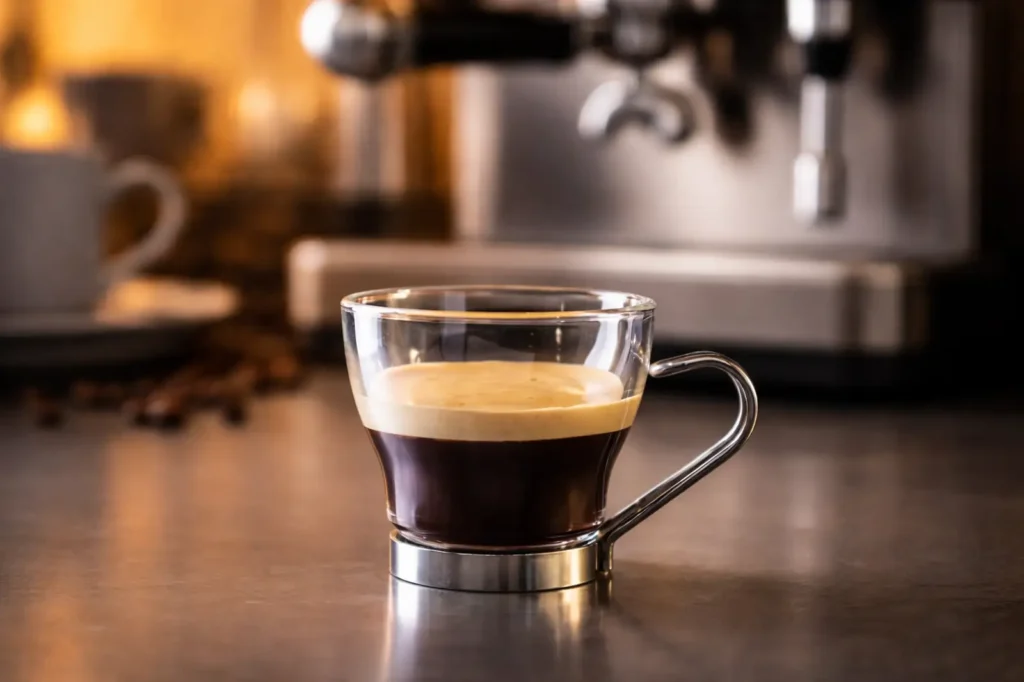
Ristretto is a short shot of espresso made with the same dose of coffee as a normal espresso but with less water in the cup. Think of it as a “restricted” pull. You stop the shot earlier, catching the sweetest part of extraction and leaving much of the bitter tail behind. The result is smaller in volume, fuller in body, and often sweeter and more aromatic than a standard espresso.
- Dose the same as a double espresso, usually 18 g in the basket
- Yield about 18–25 g of liquid coffee in the cup
- Time typically 20–30 seconds, depending on grind, machine, and beans
- Taste syrupy body, high sweetness, chocolate and fruit notes, low bitterness
How ristretto differs from espresso and lungo
- Espresso commonly 18 g in → 36–40 g out in 25–35 s
- Ristretto 18 g in → 18–25 g out in 20–30 s
- Lungo 18 g in → 60–70 g out in 35–45 s
Espresso is the baseline. Ristretto shortens the yield and often requires a slightly finer grind to keep the flow controlled. Lungo extends the yield with a slightly coarser grind to avoid over-extraction. None of these are made by adding water after the shot. That would be an Americano or a long black, which change strength by dilution, not by extraction.
Taste profile
- Body thick and syrupy
- Sweetness pronounced, with chocolate, caramel, or ripe fruit notes
- Acidity bright but round, not sharp
- Bitterness low when dialed in, since you stop before harsh compounds dominate
- Aroma concentrated and vivid, often lingering after each sip
Tools you need
- 1. Espresso machine with a portafilter
- 2. Burr grinder that allows small, precise adjustments
- 3. Digital scale accurate to 0.1 g for dose and yield
- 4. Timer your phone works
- 5. Tamper matched to your basket diameterr
- 6. Distribution tool or WDT needle optional but helpful to prevent channeling
- 7. Small preheated cup espresso demitasse or a small heat-safe glass
- 8. Microfiber towel to keep the basket dry and clean
Ristretto is sensitive to small changes. A good grinder and a scale make your results consistent. A distribution tool reduces clumps, so water doesn’t tunnel through weak spots. A preheated cup helps preserve aroma and temperature.
Ingredients
- Fresh whole coffee beans medium or medium-dark roasts are forgiving and sweet; light roasts can be stunning but require more precision
- Filtered water clean water makes clean coffee
- Chocolatey blends give rich cocoa and caramel
- Nutty Central American coffees round and sweet
- Fruit-forward single origins can pop with berry or stone fruit when dialed in
Ristretto ratios and targets
Brewed Within’s base target is a 1:1 to 1:1.4 ratio by weight
- Dose 18 g ground coffee
- Yield 18–25 g in the cup
- Time 20–30 seconds from pump start to stop
- Water temperature 92–95°C
- Use 92–93°C for darker roasts
- Use 94–95°C for medium and lighter roasts
This range captures sweetness and body without slipping into bitterness.
Step by step ristretto recipe
Step 1 Heat and prep
- 1. Turn on the espresso machine and allow 10–15 minutes for the group head and portafilter to fully heat.
- 2. Purge the group head for 1–2 seconds to refresh water in the circuit.
- 3. Preheat your cup with hot water, then empty it.
- 4. Dry the portafilter basket with a clean towel. A dry basket helps even extraction.
Step 2 Dose and grind
- 1. Weigh 18 g of coffee beans.
- 2. Grind slightly finer than your regular espresso setting. The stream should start slowly and stay tight.
- 3. Inspect for clumps. If you see them, use a WDT tool or a thin needle to break them up.
Texture clue
The grind should still be espresso-fine, just a notch finer than your normal. Avoid powdery clumps that choke the shot.
Step 3 Distribute and tamp
- 1. Tap the portafilter gently to settle the bed.
- 2. Distribute the grounds so the surface is level from edge to edge.
- 3. Tamp with firm, even pressure. The puck should be flat, with clean edges.
- 4. Wipe stray grounds from the rim so the gasket seals properly.
Step 4 Pull the shot
- 1. Lock the portafilter into the group head.
- 2. Place your preheated cup on a scale and tare to zero.
- 3. Start the pump and start your timer.
- 4. Watch the flow. After a few seconds, a thin, syrupy stream should form.
- 5. Stop the shot when the scale reads 18–25 g. Aim for your first test at 22 g in 25 seconds.
- 6. Record the yield and time. Taste right away.
Step 5 Taste and tune
- Too sour or sharp
- Grind finer by one small click
- Increase water temperature by 1°C
- Extend target yield toward 22–25 g while staying within 30 seconds
- Too bitter or drying
- Grind coarser by one small click
- Lower water temperature by 1°C
- Reduce target yield toward 18–20 g
- Thin texture
- Keep the same yield but grind finer a notch to increase body
- Or reduce yield by 2–3 g next pull
- Overly heavy or cloying
- Increase yield by 2–3 g or grind coarser a touch
Change one variable at a time so you know what improved the cup.
Why this ristretto method works
Coffee extracts in phases. Early flow brings bright acids and aromatics, the middle brings sweetness and body, and the late stage brings bitterness and woody notes. Ristretto focuses on the early and middle phases. By grinding slightly finer and stopping around 1:1 to 1:1.4, you catch the sweet spot and avoid the harsh tail. Temperature tweaks help match roast level so sweetness shines and bitterness stays low.
Water temperature guidance
- Dark roast 92–93°C helps control harshness
- Medium roast 93–94°C balances sweetness and clarity
- Light roast 94–95°C opens up aromatics and brightness
If your machine shows only bars or low/medium/high, choose the middle setting for most coffees and adjust by taste.
Pulling consistent ristrettos at home
- Warm up fully machine, portafilter, and cup
- Dose exactly 18.0 g on your scale
- Log your settings grind number, time, and yield
- Adjust in tiny steps one grind click, one degree, or 2 g of yield
- Taste in three words sweet, cocoa, cherry; or, bitter, dry, woody. Then plan your next change.
Common mistakes and quick fixes
Channeling and spurting
- Use a WDT tool to break clumps and even the bed
- Tamp level and clean the basket rim
- Check that your shower screen and dispersion block are clean
Shot chokes and barely drips
- Grind coarser one notch
- Confirm you didn’t overdose beyond the basket size
- Loosen tamp pressure slightly while keeping it level
Shot gushes and finishes in 12–15 seconds
- Grind finer one or two notches
- Check you actually dosed 18 g
- Ensure the puck surface is level
Harsh and bitter
- Reduce yield to 18–20 g and lower temp a touch
- Grind coarser slightly and try again
Sour and thin
- Grind finer and push yield toward 22–25 g within 30 seconds
- Raise temperature by 1°C
Bean selection tips for ristretto
- Chocolate-forward blends give you a textbook ristretto with caramel sweetness
- Brazil or Colombia base coffees tend to be stable and forgiving
- Ethiopian or Kenyan lots can taste like berry or citrus candy when dialed in, but they are more sensitive to grind and temperature
- Very dark roasts can turn ashy if pulled too far; keep temps low and yields small
Water and filtration
Use filtered water with moderate minerals. Extremely soft or distilled water can taste flat. Very hard water can mute flavor and scale your machine. If your area’s tap water tastes good on its own, it is probably fine for espresso.
Serving the ristretto
Enjoy ristretto as a straight, concentrated sip. If you want a touch of softness, add a teaspoon of hot water to open the aroma without turning it into an Americano. Many people also enjoy a tiny spoon of sugar to highlight sweetness. Keep additions small so the drink remains a true ristretto.
Food pairings that work
- Dark chocolate brings out cocoa notes
- Almond biscotti mirrors nutty flavors
- Citrus peel on the side lifts the aroma between sips
- Fresh berries pair nicely with fruit-forward single origins
Cleaning and maintenance
- Before brewing purge the group, keep the portafilter hot, and dry the basket
- After brewing knock out the puck, rinse the basket and spouts, wipe dry
- Daily backflush with water if your machine supports it
- Weekly use espresso cleaner and brush the group and screen
- Grinder care brush the chute and wipe burrs to reduce stale fines
Clean gear keeps flavors sweet and clear.
Safety and equipment notes
- Always lock the portafilter firmly before brewing
- Keep fingers away from the hot group head and spouts
- Use heat-safe cups and place them squarely on the scale to avoid spills
Ristretto troubleshooting map
- Gushes in 12–15 seconds → grind finer → check dose → improve distribution
- Barely drips → grind coarser → confirm basket isn’t overdosed → reduce tamp force slightly
- Harsh finish → lower temp to 92–93°C → reduce yield by 2–3 g
- Sour and sharp → raise temp to 94–95°C → increase yield to 22–25 g
- Flat and muddy → clean screen and basket → use fresher beans → try a brighter coffee
- Why small changes matter
Because ristretto is short and strong, tiny tweaks move the flavor a lot. One click on the grinder, one degree of temperature, or two grams of yield can be the difference between dull and magical. Change one thing, taste carefully, and write it down. That is the Brewed Within way to lock in a house recipe you can repeat.

What Is A Ristretto And How To Make It At Home
Equipment
- Espresso machine with portafilter
- Burr grinder
- Digital scale and timer
- Tamper and optional distribution tool or WDT needle
- Preheated espresso cup
- Microfiber towel
Ingredients
- 18 g espresso-ground coffee
- Filtered water
Instructions
- Heat the machine fully, purge, and preheat your cup.
- Dose 18 g, grind a notch finer than espresso.
- Distribute evenly and tamp level with firm pressure.
- Start the shot and timer, aiming for 18–25 g in 20–30 seconds.
- Taste and adjust one variable at a time next pull.
Notes
- Ratio 1:1 to 1:1.4
- 92–95°C water depending on roast
- Keep detailed notes for repeatability
Frequently asked questions
What does ristretto mean
It means “restricted,” which refers to the limited volume in the cup compared to a standard espresso.
Is ristretto stronger than espresso
Per sip, ristretto tastes more intense because it is concentrated, but it can be less bitter and often sweeter. Total caffeine is similar to espresso since you use the same dose, but serving size is smaller.
Do I need a different dose for ristretto
No. Use your normal espresso dose, like 18 g. The change is in grind and yield, not dose.
How long should a ristretto take
Aim for 20–30 seconds. The key is to hit 18–25 g in the cup with rich, syrupy texture.
Can I make ristretto on a capsule machine
If your machine offers a ristretto button, it will stop earlier than espresso. Results vary, but the concept is the same: less liquid from the same pod.
Why is my ristretto bitter
You might be grinding too fine or pulling too long. Try coarsening one notch, lowering temp, and stopping closer to 18–20 g.
Why is my ristretto sour
You might be grinding too coarse or stopping too early. Try finer grind, warmer water, and 22–25 g yield.
Final Brewed Within tips
- Keep dose steady at 18 g and adjust grind, yield, or temperature one at a time
- Aim first for 22 g in ~25 seconds and move from there
- Use a WDT tool if channeling shows up
- Clean gear daily so sweetness stays high and bitterness stays low
- When you hit a perfect cup, write down every detail so you can repeat it
If you want this in a printable one-page card for your espresso station, say the word and Brewed Within will format it for you.
