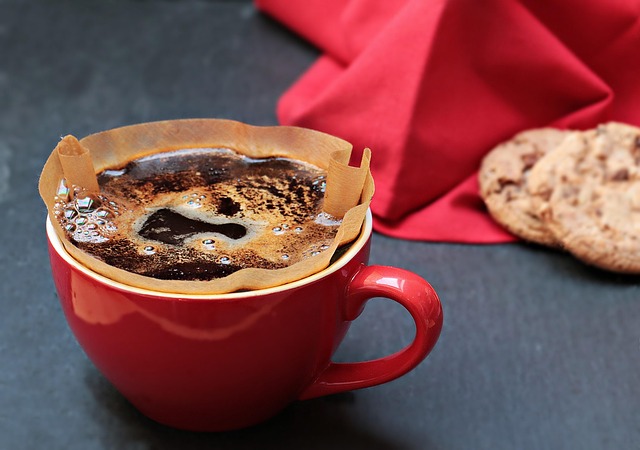
When a barista or recipe refers to "1 cup of coffee," they typically mean the final brewed liquid — about 8 fl oz or 236 ml.
To achieve this, you’ll need to start with more water than that because some water is absorbed by the coffee grounds during brewing.
- Example (1:16 ratio): 14.79g coffee + 236.59g water = 207.01g brewed coffee
- Roughly 29.58g of your water is absorbed by the grounds
- Use the calculator to base your recipe on finished coffee volume
This calculator helps you plan for that by adjusting the water-to-coffee ratio accordingly.
Why coffee-to-water ratios matter
Every brewed cup is an extraction process: water dissolves soluble compounds (acids, oils, sugars, aromatics) from ground coffee. The ratio of water to coffee sets the concentration baseline, influences extraction yield, and gives you room to fine-tune by changing grind, time, and temperature.
- Too little coffee (high ratio, e.g. 1:20) → weak, underwhelming taste
- Too much coffee (low ratio, e.g. 1:12) → overly strong, possibly harsh
- The “sweet spot” gives you balance and flexibility
Using a consistent ratio means you can replicate results. Once you find the ratio (or narrow range) that you like for a given bean and roast, you can adjust other variables around it.
The ratio concept: “1:15, 1:17, 1:18” explained
When you see a ratio like 1:17, it means 1 part coffee to 17 parts water, by mass (grams). So:
- 10 g coffee → 170 g water
- 20 g coffee → 340 g water
- Or the inverse: if you know your water mass, you can compute coffee = water ÷ 17
Ratios are more meaningful when both sides are masses (grams) rather than mixing grams and fluid volume (mL), since density varies and temperature changes affect volume.
Here’s a quick reference:
Ratio | Character | Notes |
1:15 | Strong | Bold, intense, less forgiving of errors |
1:16 | Slightly strong | A bit more forgiving, good body |
1:17 | Balanced | “Gold zone” for many drip / pour-over methods |
1:18 | Mild | Softer, more forgiving, lighter extraction |
1:19+ | Weak / Dilute | Useful for large batches or delicate roasts |
These are starting guidelines. Beans, roast, water quality, grind size, brew method, and your taste preferences will all influence your ideal range.
Finished cup vs. brew water: Why they differ
When you brew, not all the water you pour in ends up in your cup—some is held in the coffee grounds (absorption). That’s why the “water in” is slightly more than the “coffee out”.
For example, to get about 236 mL (~236 g) of brewed coffee (≈ 8 oz), you might:
- Start with ~14.8 g coffee (at 1:16 ratio)
- Use ~236.6 g water
- ~29.6 g gets absorbed or remains trapped in the grounds
A calculator embedded into your page or app can account for this, adjusting input water to match the desired output.
Example walkthrough
Let’s say you want 2 cups of coffee (about 473.18 g or let say 472 g of water) using a pour-over method, and you prefer a slightly stronger brew at a 1:16 ratio.
- Enter “2 cups” → equals 472 g of water
- Ratio = 1:16
- Coffee required = 472 ÷ 16 = 29.5 g of ground coffee
- Assuming a typical absorption loss of around 30 g (depending on grind and method), you’ll actually pour in about 502 g of total water to yield your 472 g of brewed coffee.
The calculator output would show something like:
Use 29.5 g of ground coffee with 502 g of water
Expected yield: ~472 g brewed coffee
Brew ratio: 1:16
To help you brew with more precision, the tool can also offer these suggestions:
- Water temperature: 93–96 °C (199–205 °F) for a medium roast
- Grind size: Medium-fine (table salt texture) for pour-over
- Brew time: 3½–4 minutes depending on pour rate and filter type
By adjusting just the ratio slider or number of cups, you’ll instantly see new recommended coffee and water weights—making it easy to experiment until you find your ideal flavor balance.
Expanded Guide: Variables that shift your ratio
While ratio gives you a baseline, dial-in happens by tweaking auxiliary variables:
Roast level & temperature
- Light roasts tend to benefit from higher brew temperatures (e.g. 203–212 °F / ~95–100 °C) to extract acidity and sweetness.
- Dark roasts might be brewed a little cooler (e.g. 185–195 °F / ~85–90 °C) to prevent bitterness.
- The calculator can suggest a temperature band based on roast level.
Grind size & extraction time
- Finer grind → slower flow / more extraction
- Coarser grind → faster flow / less extraction
- If extraction is under (sour / weak), you can lower ratio (stronger) or grind finer (slower)
- If over (bitter), coarsen grind or increase ratio (weaker)
Water quality
Since water is ~99% of your brew, its composition (minerals, pH) has big influence:
- Too hard → flat or dull extraction
- Too soft → underwhelming, lacking body
- Use filtered or good-quality water; optionally remineralize
- Calculator or your guide can include a note or range for optimal water hardness
Pouring / agitation / brewing method
- Pour schedule (pulsed pour, continuous pour, bloom, etc.) impacts extraction
- Agitation (stirring, swirling, pulse) helps uniform extraction
- For immersion methods (e.g. French press), you let coffee steep; for drip, control flow
- The calculator doesn’t optimize these, but guide text can offer tips.
FAQs
What is the best coffee-to-water ratio for drip coffee?
The best coffee-to-water ratio for drip coffee is typically 1:16, meaning 1 gram of coffee for every 16 grams of water. This ratio gives a balanced flavor—strong enough for body but smooth enough for clarity. Adjust slightly stronger (1:15) or lighter (1:17) based on your taste preference and roast type.
How do I use a coffee-to-water ratio calculator?
To use a coffee-to-water ratio calculator, simply enter the amount of water or the number of cups you want to brew. The calculator automatically shows how many grams of coffee you need based on your chosen ratio, such as 1:16 or 1:17. Some calculators also factor in absorption loss and provide brew time and temperature suggestions.
What is the golden coffee ratio?
The golden coffee ratio is 1:16, a widely accepted standard for balanced flavor and proper extraction. It delivers rich aroma, medium strength, and clean aftertaste across most brewing methods like pour-over, drip, and Aeropress.
How much coffee do I need for one cup?
For one standard 8-ounce (236 ml) cup, you’ll need about 15 grams of coffee at a 1:16 ratio. If you prefer a stronger cup, use closer to 14 grams; for a lighter brew, use 17 grams per cup.
Does the ideal ratio change with brewing method?
Yes. Different brewing methods require different ratios due to brew time and extraction style:
- Espresso: 1:2
- AeroPress: 1:15
- Pour-over: 1:16
- French Press: 1:15
- Cold Brew: 1:8 (concentrate) or 1:15 (ready-to-drink)
Your calculator can automatically adjust based on the selected method.
What happens if I use too much coffee or too much water?
If you use too much coffee, the result is overly strong and bitter due to over-extraction. If you use too much water, your coffee becomes weak and watery, leading to under-extraction. Keeping your ratio accurate ensures consistent flavor and optimal strength.
How can I measure coffee without a scale?
If you don’t have a scale, use standard measurements: 1 tablespoon of ground coffee equals about 5 grams. For an 8-ounce cup at a 1:16 ratio, use roughly 3 tablespoons of coffee for each cup of water. However, using a digital scale gives more consistent results.
What is the best ratio for cold brew coffee?
For cold brew concentrate, use a 1:8 ratio (1 gram coffee per 8 grams of water). For ready-to-drink cold brew, use a 1:15 to 1:17 ratio. Steep for 12–18 hours in cold water, then filter and dilute to taste.
How does grind size affect the coffee ratio?
Grind size affects extraction rate rather than the ratio itself. A finer grind extracts faster and needs shorter brew time; a coarser grind extracts slower and suits longer brewing. When adjusting grind size, keep the ratio the same and tweak time or temperature to avoid bitterness or sourness.
Can I change the coffee-to-water ratio for stronger or weaker coffee?
Absolutely. To make coffee stronger, use a lower ratio (e.g., 1:14 or 1:15). For milder flavor, use a higher ratio (1:17 or 1:18). The calculator lets you experiment easily by adjusting the ratio slider until you reach your desired strength.
Final Tip
From high-tech brewers like the Fellow Aiden to timeless icons like the Bialetti Moka Express, each of these machines celebrates the art of brewing in its own way. For home baristas, the joy lies not just in caffeine, but in the process the aroma, precision, and reward of a perfect cup.
These coffee makers offer more than convenience. They bring craftsmanship to the comfort of your kitchen, letting you experiment, refine, and discover your personal flavor balance. Whether you want programmable precision, manual control, or portable power, every model here serves one goal: to make great coffee accessible to passionate hands.
Owning the right machine turns your morning routine into a ritual worth savoring. It’s a chance to start each day with something you’ve created a flavor shaped by skill and care. From pour-overs to espresso, these coffee makers remind us that barista-level coffee isn’t confined to cafés. It’s something anyone can master with the right tools, patience, and a love for the bean.
So pick your machine, grind your coffee fresh, and pour your next cup like a professional. Because when precision meets passion, every sip tells your story.
