
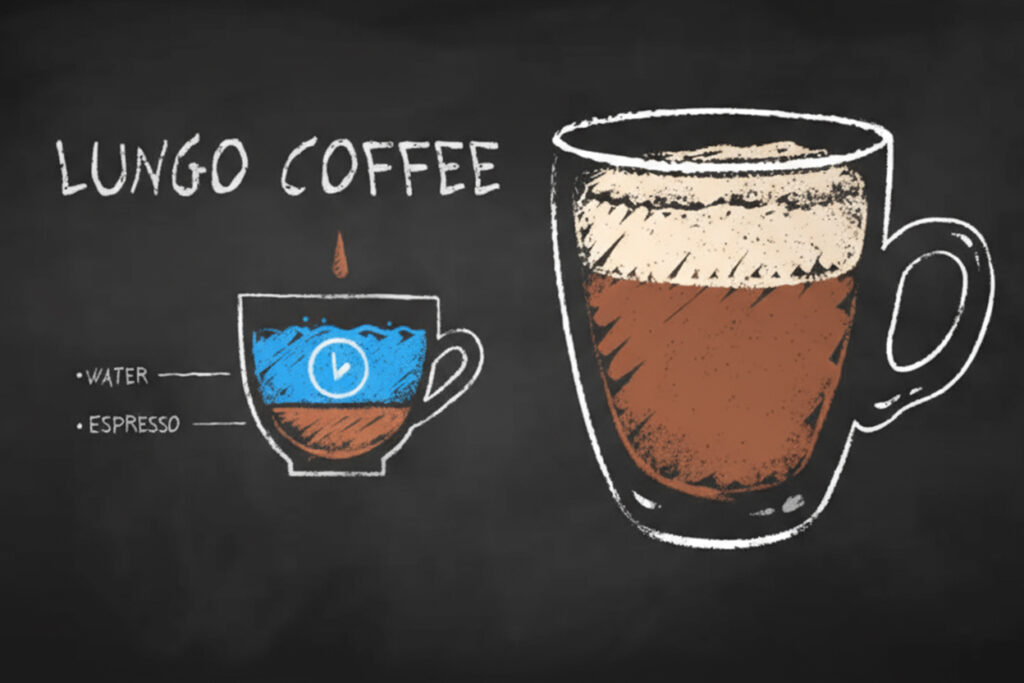
What a lungo is?
A lungo is an espresso-style drink pulled longer than a standard espresso. You use the same coffee dose you would for espresso, but you let more water run through the puck, and this coffee brewing ratios and grind size chart helps you balance grind size, yield, and extraction time. The result is a larger cup with a smoother body and a gentler bite than a ristretto or a standard espresso. A lungo keeps the character of espresso but stretches it without turning into an Americano. Unlike an Americano, which adds hot water after the espresso is done, a lungo comes from a longer extraction during the shot.
- Dose similar to a double espresso (often 16–18 g)
- Yield about 50–80 g of liquid coffee (roughly 50–80 ml)
- Time usually 35–50 seconds depending on grind, machine, and beans
These numbers can shift by a few grams or seconds based on your gear and taste. The method below gives you a dependable starting point.
- Body medium to medium light, thinner than a classic espresso but fuller than drip
- Acidity soft to moderate, depends on beans and water temperature
- Bitterness can rise if you grind too fine or run too long, so we control for that
- Aroma cocoa, nuts, toast, or fruit depending on roast and origin
Tools you need
- 1. Espresso machine with a standard portafilter
- 2. Burr grinder capable of dialing in fine settings with small steps
- 3. Digital scale accurate to 0.1 g for dose and yield
- 4. Timer a phone timer works
- 5. Tamper matched to your basket size for an even press
- 6. Distribution tool or WDT needle optional but helpful for reducing clumps
- 7. Small pitcher or mug preheated for stable temperature
- 8. Thermometer optional for checking brew water temperature
- 9. Clean microfiber towel to keep basket dry and gear clean
A lungo magnifies small process errors. A scale, a good grinder, and a consistent tamp give you repeatable results. A distribution tool helps keep water from tunneling through weak spots. A preheated mug keeps the flavor steady.
Ingredients
- Fresh whole coffee beans a medium roast is friendly and balanced
- Filtered water clean water gives clean flavor
- Medium roast brings chocolate and nut notes that shine in a lungo
- Light to medium can taste bright and tea-like when dialed well
- Dark roast can get bitter if you run too long, so use lower brew temps at the short end of the time range
The Brewed Within lungo ratio and timing
A lungo uses the same dose as a double espresso but a larger yield.
- Dose 18 g ground coffee
- Yield 60–70 g in the cup for a balanced start
- Time 35–45 seconds as a first target
- Water temperature 90–95°C depending on roast
- 90–92°C for darker roasts
- 93–95°C for medium or lighter roasts
These ranges keep sweetness and clarity while avoiding harsh bitterness from the tail of the shot.
Step by step lungo recipe
Step 1 Heat and prep
- 1. Turn on your espresso machine and let it warm up for 10–15 minutes so the group head and portafilter reach stable temperature.
- 2. Purge the group head for a second to flush any standing water.
- 3. Preheat your mug or small pitcher with hot water, then empty it.
- 4. If your machine allows, confirm your brew water sits in the 90–95°C range.
Step 2 Dose and grind
- Weigh 18 g of whole beans.
- 2. Grind slightly coarser than your normal espresso grind. You are running the shot longer, so a touch coarser helps prevent overextraction.
- 3. Inspect for clumps. If you see them, use a WDT needle or distribution tool to fluff and even the bed.
Texture clue
The grind should still be fine, not sandy like moka or Aeropress. Think “a notch coarser than your best espresso setting,” not a big jump.
Step 3 Distribute and tamp
- 1. Tap the portafilter gently to settle the grounds.
- 2. Use your distribution tool or a quick WDT swirl to level the coffee from edge to edge.
- 3. Tamp with firm, even pressure until the surface is flat and polished. Keep the puck level.
- 4. Clean stray grounds from the rim so the gasket seals well.
Step 4 Pull the shot
- 1. Lock in the portafilter and place your preheated mug on the scale. Tare to zero.
- 2. Start your shot and start the timer.
- 3. Watch the flow. It should start as a thin stream and build to a steady line.
- 4. Aim for 60–70 g in 35–45 seconds on your first attempt.
- 5. Stop the shot at your target yield even if a second or two early or late. Yield matters more than the exact second.
- If you reached 60–70 g too fast and the cup tastes sour and thin, grind finer.
- If it took too long and tastes harsh and bitter, grind coarser.
- If it tastes hollow, reduce yield to 55–60 g or raise brew temp by 1–2°C.
- If it tastes heavy and dull, increase yield to 70–75 g or lower brew temp slightly.
Step 5 Taste and tune
Sip while it is warm. A lungo should feel smooth and easy to drink. If it is not, pick a single adjustment for your next pull:
- 1. Too bitter shorten time by grinding coarser or stop at 55–60 g
- 2. Too sour lengthen time by grinding finer or aim 65–75 g
- 3. Too thin keep the same grind but reduce yield by 5 g
- 4. Too heavy keep the same grind but increase yield by 5 g
Changing only one variable at a time makes your improvements clear and repeatable.
Water temperature guidance
- Dark roast 90–92°C to avoid burning and harshness
- Medium roast 93–94°C for balanced sweetness
- Light roast 94–95°C to open up flavor
Stay within this range to protect sweetness and clarity.
Common mistakes and quick fixes
Shot runs too fast and tastes sour
- Grind finer by one small step
- Check your dose is still 18 g
- Confirm your tamp is level and firm
- Consider raising brew temp by 1–2°C
Shot runs too slow and tastes bitter
- Grind coarser by one small step
- Confirm you are not overdosing the basket
- Lower brew temp to the bottom of the suggested range
Channeling sprays or spurts from the spouts
- mprove distribution with WDT to break clumps
- Tamp level and clean the basket rim
- Check your water dispersion screen for coffee buildup
Thin body with hollow flavor
- Reduce yield from 70 g to 60–65 g
- Try a slightly finer grind at the same time window
- Use a medium roast instead of a very light roast
Dull, muddy flavor
- Clean the basket, shower screen, and portafilter
- Use fresher beans within a few weeks of roast
- Lower brew temp by 1–2°C or try a brighter coffee
Flavor tweaks that still respect the style
- Crema control pull into a small pitcher, swirl once, then pour into the mug to mix crema evenly with liquid for a smoother sip
- Sweet edge add 5–10 ml of hot water after the shot if you want a lighter finish without changing shot parameters
- Citrus lift rub a thin lemon peel on the rim for aroma, do not squeeze into the cup
- Milk microdash a tiny splash of warm milk if you want a softer finish, keep it small so the drink stays a lungo
Cleaning and maintenance for a clear cup
- Before brewing purge the group, dry the basket, keep the portafilter hot
- After brewing knock out the puck, rinse and wipe the basket and spouts
- Daily backflush with water if your machine supports it
- Weekly backflush with espresso cleaner and brush the group
- Grinder care brush the chute and burr chamber to reduce stale grounds
Clean gear keeps flavors clear and repeatable.
Dialing in workflow
- 1. Log your settings dose, grind number, yield, time, and temperature
- 2. Change one thing per session grind, yield, or temperature
- 3. Taste with intention write three words after each pull sweet, bitter, thin, bright, cocoa, nutty
- 4. Lock it in when the cup hits your target, save the exact settings for easy repeats
Why this method works
Espresso extracts in layers. The earliest part of the shot pulls bright acids and aromatics. The middle pulls sweetness and body. The tail can bring bitterness and woody notes if you run too long with too fine a grind. A lungo stretches the extraction into that later part, so we control grind and temperature to keep the cup balanced. By going a notch coarser and watching yield, you get more volume without dragging too many harsh compounds into the cup.

How To Make A Lungo At Home
Equipment
- Espresso machine with portafilter
- Burr grinder
- Scale and timer
- Tamper and distribution tool or WDT needle
- Preheated mug or small pitcher
- Microfiber towel
Ingredients
- 18 g espresso-ground coffee
- Filtered water
Instructions
- Heat the machine, purge the group, and preheat your mug.
- Grind slightly coarser than your espresso setting and dose 18 g.
- Distribute evenly and tamp level with firm pressure.
- Start the shot and timer, aim for 60–70 g yield in 35–45 seconds.
- Stop at target yield, taste, and adjust grind or yield by small steps next time.
Notes
- Coarser grind than espresso helps control bitterness during the longer pull
- Adjust yield in 5 g steps to fine tune body and flavor
- Keep brew water between 90–95°C based on roast
FAQs
What is the difference between a lungo and a long black
A long black is similar to an Americano and is built by adding hot water to espresso after extraction, often water first to keep crema. A lungo is a longer pull from the machine, not a dilution.
How much coffee should I dose for a lungo
Use your normal double dose, most home baristas do well with 18 g. The change is in the yield and time, not the dose.
What is the best grind size for a lungo
Start one notch coarser than your normal espresso grind. The longer shot needs a touch more flow to avoid overextraction.
How long should a lungo take
Aim for 35–45 seconds for 60–70 g out. You can explore 30–50 seconds depending on beans and taste.
Can I make a lungo with a capsule machine
If your machine has a lungo program, it will run more water through the pod than the espresso setting. Results vary, but the concept is the same longer extraction, larger yield.
Is a lungo stronger than espresso
Per sip, a lungo often tastes less intense because it has more water in the cup. Total caffeine can be similar since you use the same dose, but this depends on how far you pull and the beans you use.
Should I stir a lungo
A gentle swirl or quick stir can mix layers for a more even taste in the cup.
No machine alternatives and what they mean
There is no true lungo without an espresso machine, because the drink depends on pressure extraction and a controlled longer pull. If you only have a moka pot or AeroPress, you can make a strong coffee and dilute or extend it, but it will not exactly match a lungo’s pressure-based profile. Use those methods when needed, but know the flavor will be different.
Why small changes matter
The longer you run water through a puck, the more likely you are to hit the bitter and woody end of extraction. Your defenses are simple and effective a slightly coarser grind, a clear yield target, and careful temperature control. Move in small steps. Five grams of yield or one click on the grinder can shift flavor a lot. That is why the lungo is such a good practice drink. It teaches control and rewards precision.
Final Brewed Within tips
- Keep your dose steady and adjust grind, yield, or temperature one at a time
- Write down what worked so you can repeat it anytime
- Clean gear makes clear coffee, so keep your basket and group head tidy
- When in doubt, pull to 60–65 g in 40 seconds and tune from there
If you want a printable one page lungo card for your espresso station, say the word and we will format it for you.
